Ana içeriğe atla

Albert Einstein's E=m.c2

       
        Albert Einstein was a German mathematician and physicist who developed the special and general theories of relativity. He won the Nobel Prize for physics for his explanation of the photoelectric effect in 1921.
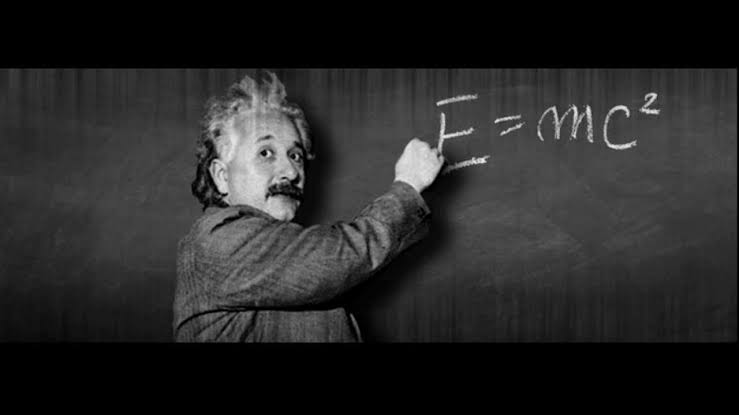
        Einstein had many discoveries but he is best known for his theory of relativity and the equation E=m.c2.
        E=m.c2; energy of a body (E) is equal to the mass (m) of that body times the speed of lights squared (c2). This equation suggested that tiny particles of mattes could be converted into huge amounts of energy a discovery that heralded atomic power. Famed quantum theorist Max Planck backed up the assertions of Einstein who thus became a star of the lecture circut and academia taking on various positions before becoming director of the Kasier Wilhelm Institute for physics from 1913 to 1933.

Yorumlar

Yorum Gönder

Bu blogdaki popüler yayınlar

Thomas Alva Edison

        Thomas Alva Edison was an American inventor who is considered one of America's leading businessmen. Edison rose from humble beginnings to work as an inventor of major technology including the first commercially viable incandescent light bulb.         Thomas Edison's inventions included the telegraph, the universal stock ticker, the phonograph, the first commercially practical incandescent electric light bulb, alkaline storage batteries and the Kinetograph.

First Women Professor

        Marie Cruie was a French chemist. She was the first women who professor. She won the Nobel Priz e. She was the first women who won the Nobel Prize. She had 2 Nobel Prize also that was the first time for history.         She worked on radioactivity. Radioactivity unit of cruie. She discovered polonium and radium.She passed away. After her death people said "She died for science."

Carles Robert Darwin

        Charles Robert Darwin  was a naturalist and biologist known for his theory of evolution and the process of natural selection.         Darwin's theory of evolution declared that species survived through a process called "natural selection" where those that successfully adapted or evolved to meet the changing requirements of their natural habitat thrived while those that failed to evolve and reproduce died off. Through his observations and studies of birds, plants and fossils. Darwin noticed similarities among species all over the globe along with variations based on specific locations leading him to believe that the species we know today had gradually evolved from common ancestors. Darwin's theory of evolution and the process of natural selection later became known simply as "Darwinism".